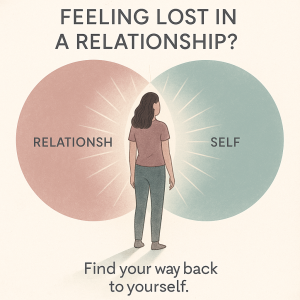
It’s easy to lose a sense of who you are when you care deeply about others.
You might notice yourself agreeing to things you don’t want, holding back opinions to keep the peace, or feeling anxious when someone pulls away. Over time, it can feel as though your identity has become blurred within the needs, moods, or expectations of those around you.
This experience isn’t limited to romantic relationships — it can happen with friends, family, or even in the workplace. Whenever connection becomes entangled with approval, we risk moving away from ourselves.
Why It Happens
Losing your sense of self often comes from a deep desire to be liked, valued, or safe.
Perhaps you learned that harmony meant staying quiet, or that love came through meeting others’ needs first. Over time, these patterns can lead to disconnection from your own voice, needs, and instincts.
Signs You Might Be Losing Yourself
* You often say “yes” when you want to say “no.”
* You second-guess your opinions or feelings.
* You rely on others to decide what’s “okay.”
* You feel anxious or guilty when prioritising your own needs.
* You can’t easily answer: “What do I need right now?”
Recognising these signs isn’t failure — it’s awareness, and awareness is the first step back to yourself.
Steps to Regain Your Sense of Self
1. Pause and Notice
Start by observing how you feel around others. Do you feel small, drained, or on edge? Awareness helps you spot when you’ve stepped away from your authentic self.
2. Reconnect with Your Needs
Ask yourself: “What do I need right now?” It might be rest, space, honesty, or comfort. Writing this down each day helps rebuild trust in your inner voice.
3. Practice Gentle Boundaries
Boundaries aren’t walls — they’re bridges of respect. Try small changes: taking time before saying yes, expressing a preference, or creating short breaks to reset.
4. Reclaim Joy and Independence
Revisit activities or spaces that feel like you: music, movement, time outdoors, creative outlets. These moments remind you that you exist beyond any role or relationship.
5. Speak Kindly to Yourself
When guilt or self-criticism appears, meet it with compassion:
“It’s okay to need space.”
“I’m learning to honour myself.”
Self-acceptance is the foundation of authentic connection.
💫 Moving Forward
Healthy relationships — whether romantic, familial, or professional — allow space for individuality. When you return to yourself, connection becomes less about approval and more about mutual respect and choice.
If you’re feeling lost in a relationship, remember you don’t need to choose between belonging and being yourself.
Coming home to who you are is not selfish — it’s how real connection begins.